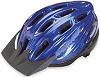
Australian Capital Territory helmet law
Introduction and scope
The ACT helmet law came into effect from 1st July 1992. It applies to all ages.
The law requires all cyclists and their passengers to wear a helmet when travelling on a public street or in a public place. In 2000, the ACT (along with the other jurisdictions) adopted the Australian Road Rules. This had the effect of replacing the original law by Australian Road Rule 256 which is of similar effect.
Compliance and enforcement
Ratcliffe, 1993 notes that self-reported wearing rates in 1991, pre-law, were 75% (work), 41% (school) and 42% (recreation). In November 1992, wearing rates were recorded as 85-88% for adults, 97% for primary school age children and 75% for secondary school age children when riding to school.
There is little enforcement of the law; it is enforced only sporadically.
Effect on casualties
No official assessment has been published, but casualties recorded by public hospitals hardly changed, from 89 in the year before the law to 87 and 88 respectively in the two years after it. Taking account of the decline in cycling, see below, this suggests that the risk of casualty increased.
Effect on cycle use
Automatic counters on bicycle paths registered declines from 1991 (pre-law) to a similar period in 1992 (post-law) of about one third on weekdays and about half at weekends (Ratcliffe, 1993).
Cost benefit
No analysis.
References
Ratcliffe, 1993
Ratcliffe P, 1993. Bicycling in the ACT - a survey of bicycle riding and helmet wearing in 1992. ACT Dept of Urban Services .
See also