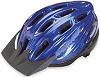
Helmet protection from head injuries among recreational bicyclists
Wasserman RC, Buccini RV. American Journal of Sports Medicine, 1990;18(1):96-7
|
BRIEF NOTES
This is not a complete Commentary but a summary of observations and criticisms that have been made relating to this paper
|
Summary of paper (from authors' abstract)
Data was collected from questionnaries returned by mail from 191 recreational bicyclists who reported having fallen and struck their heads in a cycling mishap. Information was collected on the nature of the mishap, the extent of injury and whether the rider was wearing a helmet at the time of the fall. 57% of riders were wearing a helmet during the mishap. Helmet wearers were significantly older than those not wearing helmets. Helmet wearers experienced significantly fewer skull fractures (1% v 11%) and facial soft tissue injuries (5% v 18%) than non-wearers. No other variables accounted for differences in injuries.
Peer criticism
Based on Towner et al, 2002:
- Injuries and helmet use were self-reported and therefore subject to reporting bias.
- The cases (helmet wearers) were significantly older than non-wearers and suffered more arm and leg injuries. This suggests that the two groups of cyclists were not directly comparable.
- Neck injuries were more frequent in helmeted riders.
- Facial injuries were reduced in helmeted riders as well as head injuries, although it is not clear how helmets protect against lower face injuries.
- Cyclists killed or seriously injured were not included.
- Some controls were wearing non ANSI approved helmets, but it is not clear how many.
- All the cyclists were cycling enthusiasts; there is no information about how these compared with the general population.
- Helmet use was high and there is no informtion about how helmet wearing compared with the population norms.
- Disparity between self-reported injury and admission to hospital. 1/3rd of helmeted and 40% of unhelmeted said they suffered concussion although overall only 50% had medically attended injuries and only 25% of these had been admitted to hospital.
- Some cyclists are counted more than once in the injury tables.
- Small sample study (109 cases and 82 controls).
Also:
- Possible lack of detachment on the part of the researchers, whose paper ends: "The problem is how to get more bicyclists to wear bicycle helmets".
Conclusion
There are too many discrepancies and uncertainties for this to be a reliable study.
References
Towner et al, 2002
Towner E, Dowswell T, Burkes M, Dickinson H, Towner J, Hayes M, 2002. Bicycle helmets - a review of their effectiveness: a critical review of the literature. Department for Transport Road Safety Research Report 30.